Bungalow Design in Ahmedabad: What Every Homeowner Should Know
Designing a bungalow is one of the most personal projects a homeowner will ever undertake. Unlike buying a ready apartment, building and designing a bungalow from the ground up means every decision — from the shape of the staircase to the direction a window faces — is made for you, by you.
That freedom is exciting. It is also, for most people, unfamiliar territory.
This guide covers what actually goes into thoughtful bungalow design in Ahmedabad — the decisions that shape how your home looks, how it functions, and how it feels to live in every single day.
The Foundation of Good Bungalow Design: Space Planning
Understanding How You Actually
Live
Good space planning starts with a simple but often overlooked question — how do you actually live? Not how you imagine you’ll live, but the reality of your daily routines, your family’s habits, and the way you use your home.
Do you entertain frequently or prefer privacy? Do you work from home and need a dedicated quiet space? Do you have elderly family members who need ground-floor access? Do your children need separate activity areas?
These answers directly shape how a bungalow should be planned — where rooms are placed, how they connect, and what kind of spaces serve your lifestyle best. A skilled architect translates your way of living into a layout that supports it, rather than working against it.
Zoning — The Invisible Structure of a Comfortable Home
One of the most important concepts in residential design is zoning — the organisation of a home into distinct areas based on activity and privacy levels.
A well-zoned bungalow separates public spaces (living, dining, entrance) from private spaces (bedrooms, study) and service areas (kitchen, utility, staff quarters) in a way that feels natural. Guests never pass through private areas. Noise from active spaces does not disturb sleeping areas. The kitchen connects efficiently to the dining room without being visible from the living area.
This kind of organisation happens at the planning stage. It cannot be retrofitted once walls are built.
Architecture and Climate: Designing for Ahmedabad
The Challenge of Ahmedabad's Climate
Ahmedabad experiences extreme summer heat, strong monsoon rainfall, and relatively mild winters. A bungalow that does not account for this climate will be uncomfortable for several months of the year regardless of how beautiful it looks.
Good architectural design in Ahmedabad actively works with the climate rather than against it. This means carefully considered decisions around building orientation, window placement, shading, ventilation, and material selection — all working together to reduce heat gain in summer and allow natural light and breeze where needed.
Orientation and Natural Light
The direction your bungalow faces, and how rooms are positioned within that orientation, has a direct impact on how much natural light enters each space and at what quality.
East-facing rooms receive pleasant morning light. North-facing spaces get consistent, diffused light without direct sun glare — ideal for studies and art spaces. West-facing rooms can become very hot in the afternoon. South-facing spaces work well in winter but require shading in summer.
These are not decorating decisions. They are architectural ones — and they are made when your floor plan is being designed.
Ventilation and Cross Breeze
Natural ventilation in a home depends on how windows, openings, and spaces are positioned relative to each other. A bungalow designed with cross-ventilation in mind allows breeze to move through the home naturally, reducing dependence on air conditioning and making the space feel alive.
In Ahmedabad, where summers are harsh, a home that breathes well is a genuine quality-of-life advantage.
The Elevation: Your Bungalow's First Impression
Ventilation and Cross Breeze
The external elevation of a bungalow is its face — the first thing you see when you arrive home and the visual presence it presents to the world. In modern residential design, elevation is not merely decoration applied to the outside of a building. It is an expression of the spatial and architectural idea behind the home.
Contemporary bungalow elevations in Ahmedabad range from clean minimalist facades with flush surfaces and large openings, to more expressive designs using material contrasts, textured cladding, screens, and layered volumes.
The best elevations are those that emerge naturally from the design — where the inside and outside feel like they belong to the same idea, not two separate exercises.
The Elevation: Your Bungalow's First Impression
The Living and Dining Area
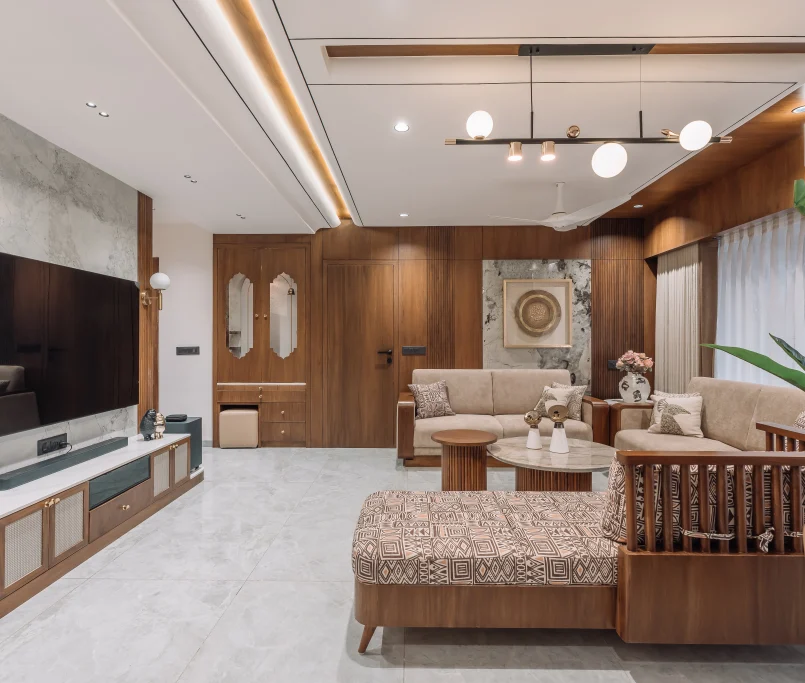
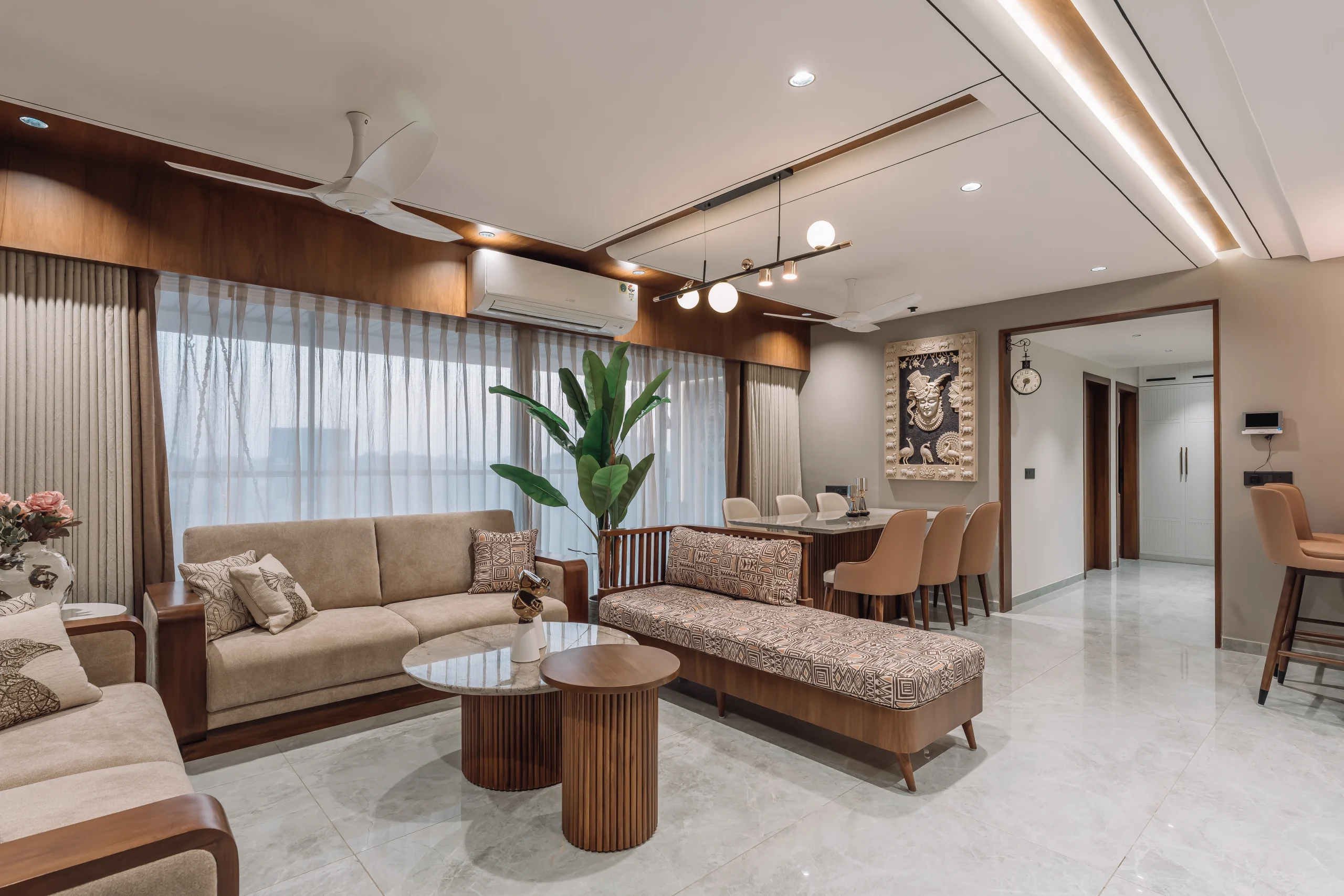
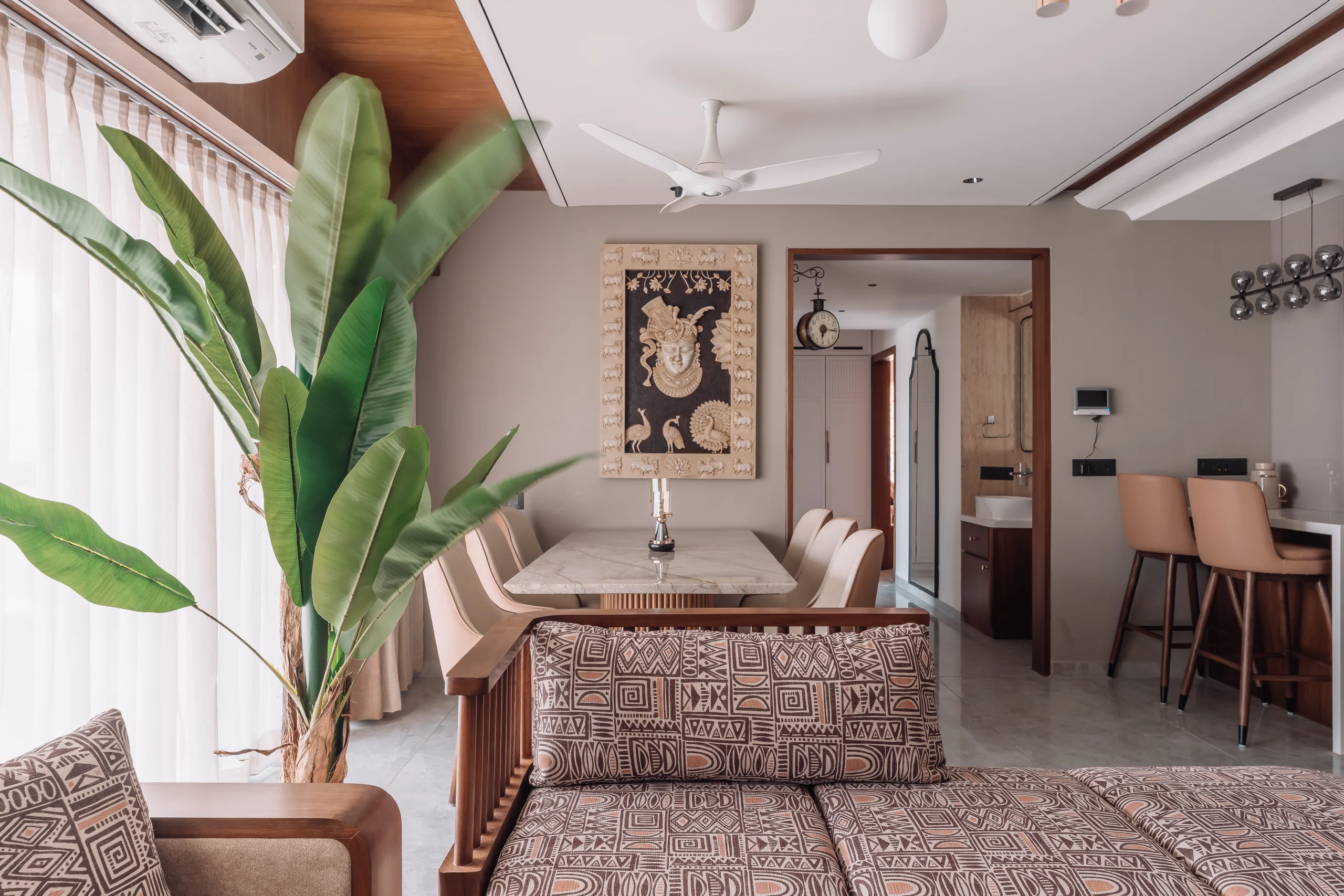
These are the social heart of the home — the spaces where family gathers and guests are received. A well-designed living-dining area balances openness with warmth, connects visually to the outdoors where possible, and has a ceiling height that feels generous without being cavernous. Lighting design here is critical — the right combination of ambient, accent, and task lighting transforms the space at different times of day.
The Kitchen
The kitchen is the most functionally demanding space in a bungalow. Good kitchen design is about workflow — how ingredients move from storage to preparation to cooking, and how the cook interacts with the rest of the family. Whether the kitchen is open, semi-open, or closed is a significant design decision that affects the experience of the entire ground floor.
Bedrooms and Private Spaces
Bedrooms in a well-designed bungalow are not just sleeping rooms. They are private sanctuaries — spaces that support rest, personal time, and quiet. Good bedroom design pays attention to the position of windows, the placement of wardrobes, the relationship to an attached bathroom, and the acoustic separation from noisier parts of the home.
Staircases and Transitional Spaces
In multi-storey bungalows, the staircase is one of the most architecturally expressive elements. A beautifully designed staircase can become a central design feature of the home — and the transitional spaces around it, like landings and double-height volumes, offer some of the most memorable spatial experiences in residential design.

Choosing the Right Architect for Your Bungalow in Ahmedabad
The most important design decision you will make is not what tiles to choose or what colour to paint your walls. It is which architect you work with.
A good residential architect brings three things to your project: design intelligence that translates your vision into a coherent spatial idea, technical knowledge that ensures your home is built correctly and safely, and project experience that anticipates problems before they become expensive mistakes.
When evaluating architects in Ahmedabad, look at the range and quality of their residential portfolio, how they approach the early design conversation, and whether they handle both architecture and interiors — or just one. Ask about their involvement in site supervision, because a design that is not properly supervised during construction will not be built as designed.
Frequently Asked Questions
Ideally, before finalising a plot. An architect can assess whether the plot's orientation, shape, size, and surrounding context will support the kind of home you want to build. Some plots that look attractive are actually difficult to design well for specific requirements.
For a well-resolved bungalow design, the design and drawing phase typically takes two to three months. Rushing this stage is one of the most common reasons projects run into problems during construction.
If your architect's firm also handles interior design — and many premium firms in Ahmedabad do — working with a single team is almost always the better choice. Design continuity from architecture to interiors produces a more coherent result and avoids the coordination gaps that arise when two separate teams work on the same project.
Yes — and many of our clients in Ahmedabad ask for this. Vastu principles and contemporary architecture are not mutually exclusive. A thoughtful architect can integrate Vastu considerations into a modern design without compromising the spatial or aesthetic quality of the home.
Building a bungalow in Ahmedabad is a once-in-a-generation opportunity for most families. It deserves the same level of care and thoughtfulness at the design stage as it does at the construction and finishing stages.
If you are beginning to plan your bungalow and would like to understand what a well-designed home on your plot could look like, we would be glad to have that conversation.